Information technology · Software development
Software built to beunderstood, run and kept alive
AVEL VAT is an engineering company working on custom software, web and mobile applications, integrations and cloud infrastructure. We care about systems that stay maintainable long after the first release.
- Focus
- Engineering
- Language
- English
- Contact
- By email


Company overview
A software company organised around engineering judgement rather than volume.
AVEL VAT works with organisations that need software to do real operational work: serve customers, move data between systems, support internal teams and remain dependable under load.
Our approach is deliberately unglamorous. We start by understanding the problem and the constraints around it, propose the smallest technical shape that solves it well, and then build carefully with tests, review and documentation as part of the work rather than as an afterthought.
We work in English, communicate in writing, and prefer clear scope over open-ended promises. Where something is uncertain, we say so.
Core capabilities
Seven areas of practice that combine into one delivery team.
Product engineering
End-to-end delivery of applications, from architecture and data modelling to release.
Backend systems
APIs, services, background processing and data pipelines.
Frontend engineering
Accessible, responsive interfaces with predictable state.
Cloud and DevOps
Environments, automated delivery pipelines and observability.
Integration
Connecting existing systems without duplicating their logic.
Quality engineering
Test strategy, automation and release verification.
Security engineering
Threat-aware design, review and hardening practices.
Featured services
Four areas where most engagements begin.
The Services page describes twelve areas of work in detail. These four are the ones organisations most often approach us about first, and they frequently overlap within a single programme of work.
- 01
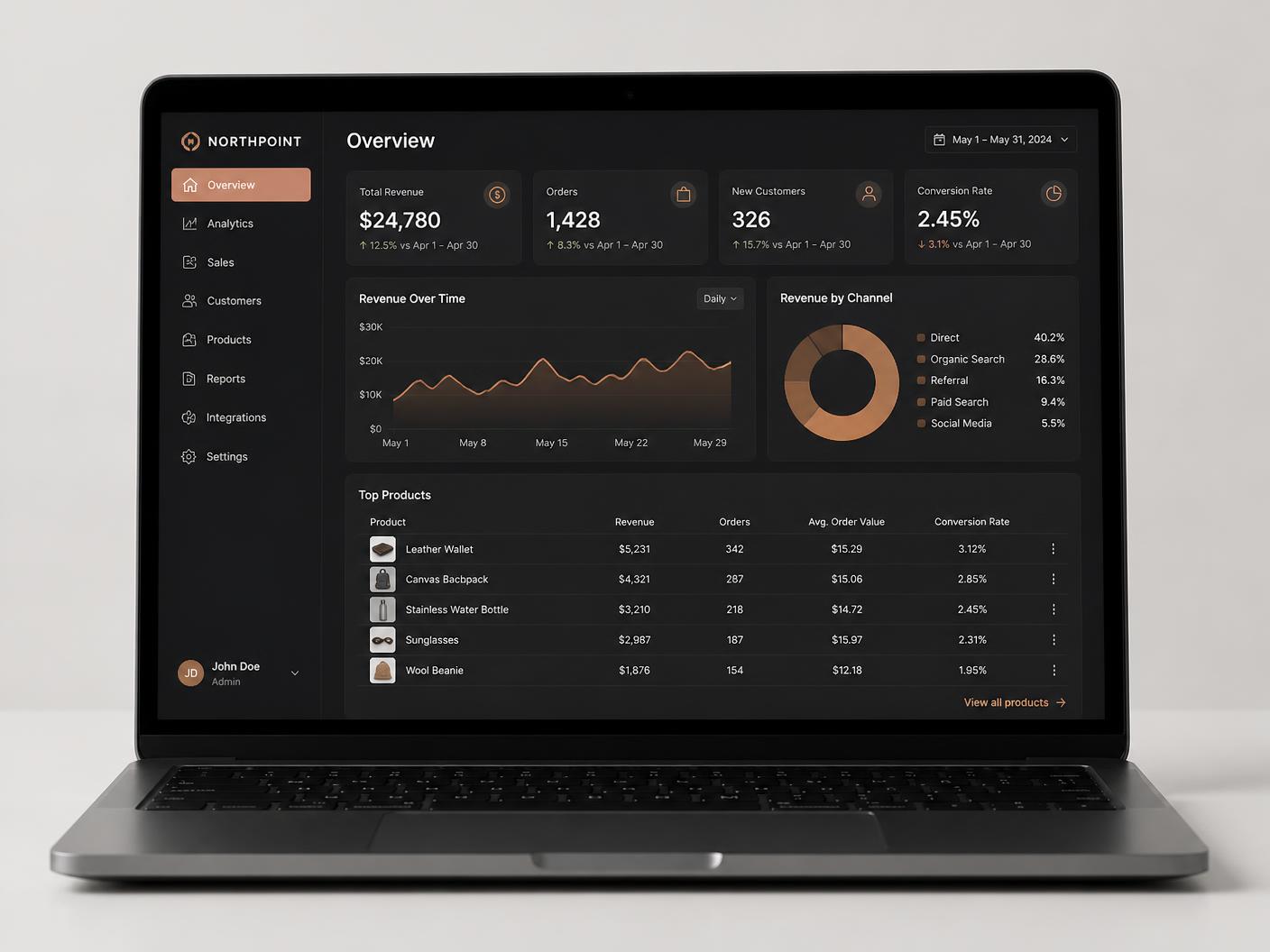
Custom software development
Systems shaped around a specific operational process instead of a generic product template.
- 02
Web application development
Browser-based applications with careful attention to performance, accessibility and data integrity.
- 03
Mobile application development
Applications for phones and tablets, designed for intermittent connectivity and device constraints.
- 04
Cloud solutions
Hosting, scaling and operational tooling for workloads that need to run continuously.
Business challenges we solve
The problems that usually bring an organisation to an engineering partner.
- Manual processes
- Work that depends on spreadsheets, copy-paste and personal knowledge.
- Disconnected systems
- Tools that hold overlapping data and disagree with each other.
- Ageing applications
- Software that still works but is expensive and risky to change.
- Unclear reliability
- Failures that are noticed by users before they are noticed internally.
- Slow release cycles
- Changes that take weeks to reach production because deployment is manual.
- Unowned security
- Dependencies, access and data handling with no consistent review.
Industries we support
Different sectors, similar engineering problems.
Domain rules differ; the underlying needs — correct data, dependable interfaces and change that does not break what already works — rarely do.
- Financial technology01
- Logistics and supply chain02
- Healthcare technology03
- Retail and e-commerce04
- Manufacturing operations05
- Education technology06
- Professional services07
- Media and publishing08
Technology expertise
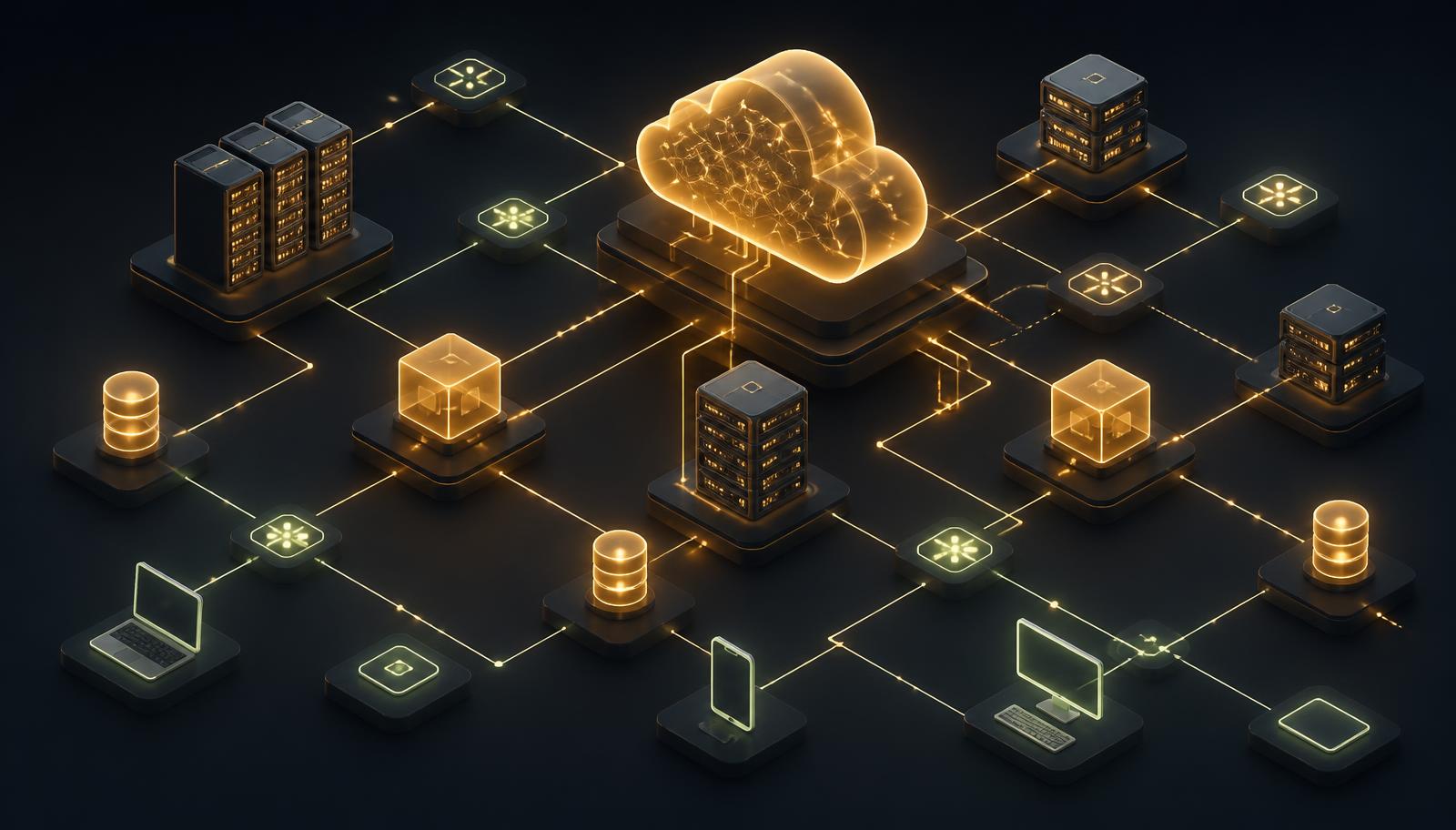
We select technology per problem, favouring tools with long support horizons and a wide base of engineers who can maintain them.
Languages
TypeScript, JavaScript, Python, Java, Kotlin, Swift, Go, SQL
Web
React, Node.js, REST and GraphQL APIs, server-side rendering, progressive enhancement
Mobile
Native iOS and Android development, cross-platform frameworks, offline-first patterns
Data
Relational databases, caching layers, message queues, reporting and analytics pipelines
Cloud
Containerised workloads, infrastructure as code, managed database and storage services
Operations
CI/CD pipelines, monitoring, structured logging, alerting and incident review
Development process
A sequence that keeps decisions visible from first conversation to long-term care.
- Step 01
Discovery
Understand the problem, the users, the data and the constraints.
- Step 02
Definition
Agree scope, architecture, delivery rhythm and success criteria.
- Step 03
Design
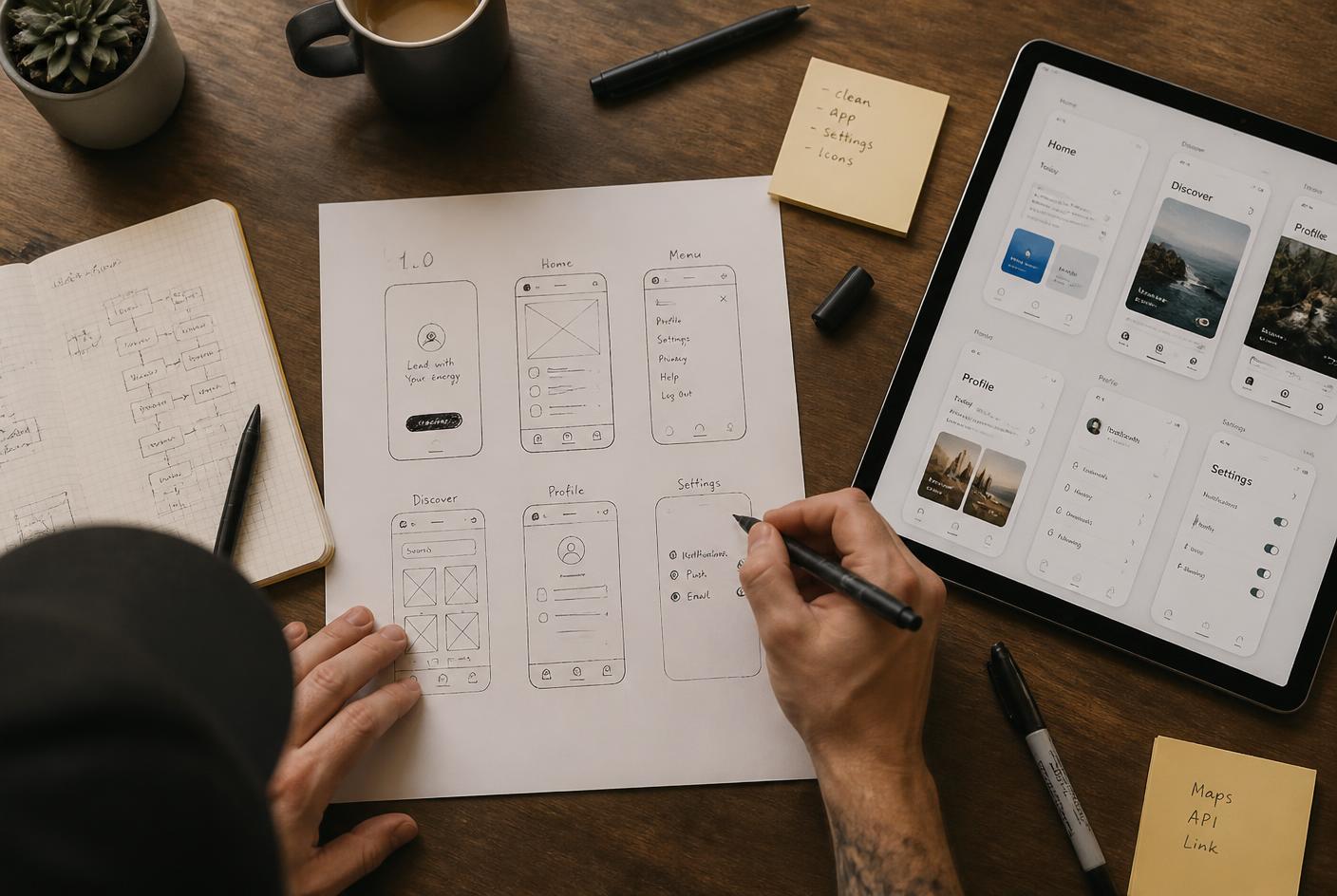
Interface and system design produced together, not sequentially.
- Step 04
Build
Short iterations with review, automated tests and working increments.
- Step 05
Verification
Functional, integration, performance and security testing.
- Step 06
Release
Controlled deployment with rollback paths and monitoring in place.
- Step 07
Evolution
Measured improvement, maintenance and dependency care over time.
Scroll horizontally to view the full sequence

Security and quality standards
Practices we apply consistently, rather than certifications we claim.
Secure by design
Threat modelling and data-flow review before implementation, not after.
Least privilege
Access scoped narrowly for people, services and deployment pipelines.
Dependency hygiene
Tracked third-party components with a routine for updates and advisories.
Automated verification
Unit, integration and end-to-end tests running on every change.
Code review
Every change read by another engineer before it reaches a shared branch.
Observable systems
Structured logs, metrics and alerts so failures surface internally first.
Reasons to choose AVEL VAT
What working with us actually looks like.
Engineering-led conversations
You talk to the people who will write and operate the software, not only to account managers.
Honest scope
We describe what is uncertain and what we would need to learn before committing to it.
Maintainability first
Code, tests and documentation are written for the person who inherits them.
Written communication
Decisions, trade-offs and open questions are recorded so nothing depends on memory.
Incremental delivery
Working software early and often, so direction can change before it becomes expensive.
Long-term view
We plan for the years after launch: updates, migrations and gradual change.
Example project scenarios
Illustrative situations, not client case studies.
The scenarios below describe common engineering situations and how we would typically approach them. They are written as examples of method and are not descriptions of specific completed engagements.

Replacing a spreadsheet-driven operations process
- Situation
- An operations team coordinates daily work across several shared spreadsheets, with no history of changes.
- Approach
- Model the process as data, build a small web application around it, and migrate the existing records with validation.
- Possible outcome
- A single source of truth with an audit trail, and reporting that no longer needs manual assembly.
Connecting two systems that hold the same customer data
- Situation
- A CRM and a billing platform each hold customer records that drift apart over time.
- Approach
- Define the authoritative source per field, build an integration service with reconciliation and error handling.
- Possible outcome
- Predictable synchronisation and a clear place to look when records disagree.
Modernising an application that is hard to change
- Situation
- A long-lived application still serves users, but releases are risky and onboarding new engineers is slow.
- Approach
- Add characterisation tests, isolate modules behind interfaces, then replace parts incrementally.
- Possible outcome
- Change becomes routine rather than exceptional, without a disruptive rewrite.
Frequently asked questions
Questions we are asked before a first conversation.
- What kind of software does AVEL VAT build?
- We build custom business software, web applications, mobile applications, internal tools, integration layers and cloud-hosted platforms. The work usually involves both new development and improvement of systems that already exist.
- How does an engagement usually begin?
- An engagement begins with a discovery conversation about the problem, the users and the constraints. From there we describe a scope, a technical approach and a delivery rhythm before implementation starts.
- Can AVEL VAT work with an existing in-house team?
- Yes. We can take responsibility for a complete product, or work alongside an internal team on a specific area such as backend services, frontend engineering, testing or infrastructure.
- How is quality handled during development?
- Quality is handled continuously rather than at the end: code review, automated tests, static analysis, environment parity and release checks are part of the normal delivery cycle.
- What happens after a product is released?
- Software needs ongoing attention. We offer maintenance and support arrangements that cover monitoring, dependency and security updates, defect resolution and incremental improvement.
- Which technologies does the team work with?
- We work mainly with widely supported, long-lived technologies across web, mobile, backend, data and cloud platforms, and we choose per project rather than applying one stack to every problem.
- How can we get in touch?
- Write to [email protected] with a short description of your situation. Please include the outcome you are looking for and any constraints such as timing, existing systems or compliance requirements.
Contact information
Written enquiries only, answered in English.
Describe the outcome you need, the systems involved and any constraints on timing or compliance. A short written summary is usually enough to start a useful conversation.
- Company
- AVEL VAT
- [email protected]
- Domain
- aveltax.com